

The Gray Tide: Latin America’s Demographic Transformation
This article is adapted from AQ’s special report on Latin America’s demographic transformation | Leer en español | Ler em português
MONTEVIDEO—For more than 25 years, Jardín Sonrisitas (“Little Smiles Kindergarten”) taught kids their ABCs in Villa del Cerro, a working-class portside district in Uruguay’s capital. But in December, the beloved kindergarten closed: one of three local creches to shut in as many years.
Today, the building’s shutters are pulled down, its outdoor play equipment piled to one side. The reason is simple, said Catalina Clara, 38, whose six-year-old daughter was one of the last four students: “People aren’t having many kids anymore.”
In fact, only about 29,000 babies were born in Uruguay last year—down from about 49,000 a decade ago, reaching lows last seen in the 19th century. Deaths have outnumbered births for six years straight. As the number of school-age children shrinks, an additional 80 private schools in Greater Montevideo are projected to close by 2030. Even at those still open, many sense a new era is underway. “For us Latinos, large families have a positive connotation,” said Ignacio Cassi, the principal of Montevideo’s prestigious Colegio Seminario, where the student body has shrunk 10% in five years. “It’s hard not to feel a certain nostalgia.”
Uruguay is not alone: Latin America is in the early days of a historic demographic transformation, one that seems destined to reshape politics, businesses, communities, and how people live for decades to come.
Statistics only begin to capture the impact. According to UN data, the fertility rate in Latin America is now 1.8 births per woman: down from six in 1950, and below the replacement level of 2.1. By 2100, if current trends hold, national populations will decline by a third in Chile and Uruguay, a quarter in Brazil, and a fifth in Argentina.
Since 1950, Latin America’s life
expectancy has increased 27 years…
…while fertility rates plunged from nearly 6 to 1.8 per woman…
…meaning the region will rapidly age in decades to come.
North America, Europe and parts of Asia have all seen similar trends since the 2010s. But in Latin America, the decline has accelerated beyond all forecasts, sending policymakers scrambling to gauge the impact on everything from taxes and pensions to future economic growth. Incredibly, Chile now has a lower birth rate than Japan. Recent censuses found populations significantly smaller than officials expected in Brazil (203 million, not 213 million) and Chile (18.5 million, not 20 million). Paraguay’s 2022 survey arrived at a figure of just 6.1 million, not 7.5 million: a fifth smaller than previously assumed. “We’ll basically have to plan for a new Paraguay,” the baffled economy minister told reporters.
Given that life expectancy has also been rising as birth rates fall, today’s Latin America is now aging faster than any other region in the world. In 1980, just 5% of the population was over 65. That figure has since doubled—and will grow to 25% in 2050. “This will bring enormous consequences,” said Luis Rosero-Bixby, a veteran demographer and founder of the Centro Centroamericano de Población at the University of Costa Rica. “It means profound changes in various parts of society.”
Call it the Gray Tide: a political and economic sea change even greater in scope and impact than the so-called Pink Tide of leftist governments that transformed the region at the turn of the 21st century. Where the Pink Tide depended on fleeting external conditions—a rising China, soaring commodity prices—the continent’s increasingly top-heavy population pyramid reflects trends that are seemingly here to stay.
Yet where some see crisis, some others see opportunity. Businesses are investing in expected future growth areas from accessible tourism to care homes and robotics, part of a so-called “silver economy” projected to more than double in size in Latin America to some $650 billion by 2033. And many everyday people see smaller families not as a national emergency, but a path to a more fulfilling and sustainable life.
Indeed, if the region prepares now, it may be able to slip into middle age gracefully, according to Cristina Querubín, a consultant for the Inter-American Development Bank (IADB).
“It’s almost an unavoidable process,” Querubín said. “The real challenge is how we adapt to these changes, and how our societies can age with greater dignity.”
The demographic shift “means profound changes in various parts of society.”
— Luis Rosero-Bixby, veteran demographer and founder of the Centro Centroamericano de Población at the University of Costa Rica
The missing millions
Whether one sees the trend as positive or negative, everyone agrees it is a major change for a region that once prided itself on making babies—lots of them.
When Gabriel García Márquez accepted the Nobel Prize for Literature in 1982, he estimated Latin America had seen five wars, 17 coups, 120,000 forcible disappearances, 200,000 casualties to conflict and repression, 4 million exiles, and 20 million infant deaths in the previous 11 years alone. “In spite of this,” the Colombian author told the Swedish Academy, “to oppression, plundering and abandonment, we respond with life.”
Indeed, the region underwent a “population explosion” in the 20th century, said Rosero-Bixby, the veteran demographer. Between 1900 and 2000, the continent’s inhabitants grew nine-fold—more than double the world average—from 60 million to 520 million. Far from the sultry Caribbean of García Márquez’s novels, the Uruguayan folk song Gurusito captured parents’ dogged optimism in the shadow of the Cold War: “And though you’re born poor / I’ll still bring you too / the dawn is in need / of children like you.”
Why has today’s Latin America changed so much? Part of the answer dates back decades. The steepest downward curve came between 1960 and 1990, as Latin Americans moved to cities and began using contraception. Vaccination campaigns, improved sanitation and better nutrition also slashed infant mortality and boosted life expectancy. A child born in the region in the mid-20th century was unlikely to live past 50; one born today will probably reach 76.
Rising high school attendance among girls, now above 90% in Latin America, also helped women postpone childbearing and have smaller families. Ediltrudis Noguera, a ceramicist from the Paraguayan town of Tobatí, watched her mother struggle to support 15 children by selling handmade pots. She married later, and limited her own family to eight. “It was my decision,” said Noguera, 60. “My husband had to accept it.”
Current fertility rates vary widely by country
But it’s the deepening decline in birth rates since the 2010s, and an apparent free fall since the COVID-19 pandemic, that has alarmed some policymakers and left social scientists divided as to the potential causes.
A near-tripling of university enrollment from 23% of the college-age population in 2000 to 58% in 2023—as countries like Brazil, Peru, Argentina, and Chile opened campuses that were more accessible to working-class students—seems to have broadened horizons beyond a life of raising children for many younger people. “You could even call it a kind of fashion: wanting very small families, or not having children at all,” said Rosero-Bixby.
Some analysts note that birth rates dived around the same time smartphones swept the region more than a decade ago. Latin America has some of the world’s highest rates of social media usage, with Brazilians for example spending an average of more than three and a half hours a day on platforms like Instagram and WhatsApp. “Our children are being brought up by screens,” said Alfonso Tolosa, a father of two from Colonia, in western Uruguay. “But to start a family, you need to go out and socialize.”
Policy changes also played a role. Since 2005 Uruguay has more than halved sky-high rates of teenage pregnancy by expanding sex education, abortion access, and family planning services, including free sub-dermal implants for vulnerable and post-partum girls. “We see it as positive that adolescents can discover their sexuality without forced pregnancies,” said Tamara Abracinskas of MYSU, a feminist NGO. “It’s not like Uruguayans are going to disappear.”
Rodrigo Villaverde, a 31-year-old literature professor, used to work at Colegio Los Vascos, a Montevideo school established in 1867 that closed its doors in January. Perhaps ironically, he said he and his girlfriend don’t plan to have children: partly to pursue their own ambitions, partly because he doesn’t like kids. And the global outlook, he added, “doesn’t exactly invite you to procreate.”
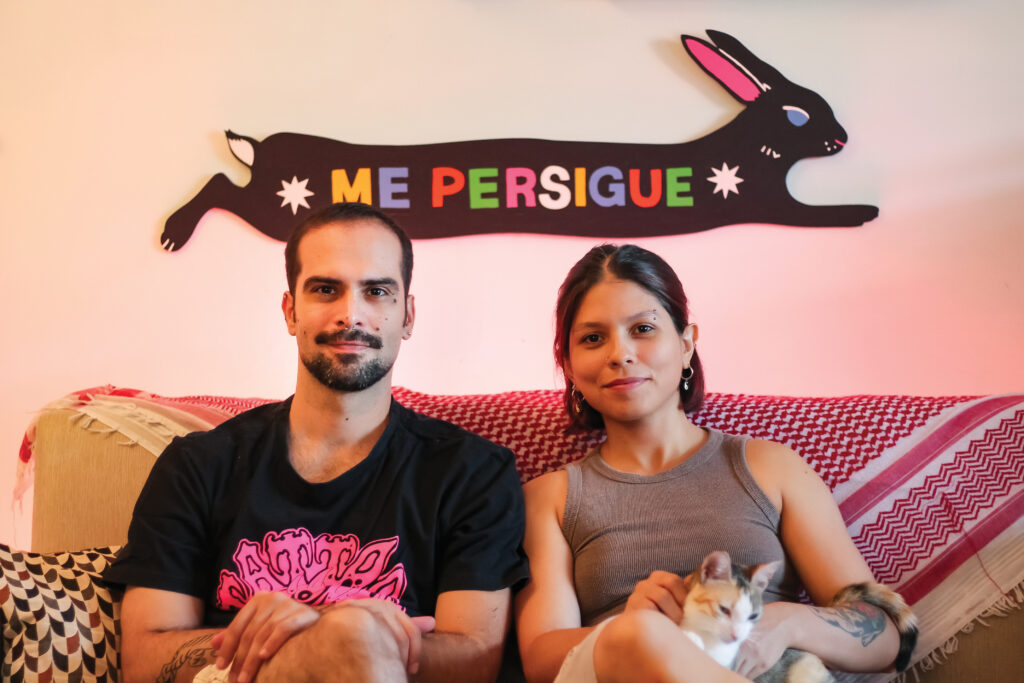
“We’d basically have to win the lottery to think about the long-term commitment of having kids. Will we even be able to retire?”
— Nadia Gómez of Asunción, Paraguay, pictured with her partner Fernando Cañete
Childless by choice
Latin America is home to especially pronounced versions of several other trends that are depressing birth rates around the world, from the high cost of living to the uncertainty of informal work, to worries about climate change and crime.
For Fernando Cañete and Nadia Gómez, parenthood feels an impossible and even frightening prospect. The couple, both 34, live in a two-room apartment with their three cats in downtown Asunción, Paraguay’s capital. Their income—she works in communications, he’s an architect—covers rent but leaves little room to save. “We’d basically have to win the lottery to think about the long-term commitment of having kids,” said Gómez. “Will we even be able to retire?”
Children can no longer roam the streets, instead requiring constant supervision and expensive extracurriculars, the couple believes. Adding to their angst: temperatures now regularly exceed 40°C (104°F) in the summer, triggering frequent blackouts. “How could we comfortably bring a child into the world,” asked Gómez, “when we’re already suffering the consequences of climate change?” Cañete admitted to feelings of fatalism about technological upheaval and capitalism in general: “Sometimes, I wish humanity would just die out.”
For those who do wish to continue the species, reliable co-parents and careers can be in short supply. Rural-urban migration has disrupted Latin America’s tradition of multi-generational households, meaning grandparents are often too far away to serve as free babysitters. Latin American women perform twice as much unpaid care and domestic work as men, making parenthood less attractive.
Politicians have been trying to get their hands around the issue, with mixed results. Former Chilean President Gabriel Boric—who last year posted a grinning photo with his six-week-old daughter, his beard matted with regurgitated milk—won plaudits during his 2022-26 term for reducing the work week, expanding remote-work options for parents, and strengthening Chile’s National Care System. A self-described feminist, he has also passed reforms allowing the state to recover unpaid child support from debtors’ bank accounts and pensions to help single mothers.
His successor, José Antonio Kast, has also called falling birth rates an “urgent” priority—and is set to take a different tack on policy. A Catholic father of nine and outspoken opponent of abortion, Kast has warned “there won’t be a Chile” unless more babies are born to non-migrants. His proposals include giving mothers one-time cash payments of $2,000.

Critics say such policies won’t work without improving living standards. “It’s not that women don’t want to have kids,” said Thiare Pérez, 34, a community organizer and mother of two from Lo Hermida, a sprawling informal neighborhood in Santiago, the capital. “The system itself has made life so precarious that raising children with dignity is harder than ever,” she argued. And she chafed at how society has pivoted from demonizing working-class mothers for having too many babies to chastising them for having too few.
Concerns over crime can also influence decisions in a region that accounts for about 30% of the world’s homicides, despite having just 8% of its population. Nearly one in five Latin Americans call crime the most important problem facing their country, with higher percentages in places like Ecuador, Chile and Uruguay.
Matías Morales, 28, who helps run his family’s convenience store in Montevideo’s Villa del Cerro, contrasted his childless life with that of his grandparents, who arrived as refugees from Armenia and raised six children. Each went on to have families of their own. But the closure of the neighborhood’s last meatpacking plant in 1989, followed by economic crises and the fallout from COVID-19, opened the door for drug gangs. Morales has been held up at gunpoint; his mother’s partner has been shot.
“Society’s values are different today … Narcoculture is spreading,” Morales said. “No one’s thinking about having kids anymore.”
“The main challenge for Latin America is that the region will get old before it gets rich.”
— Ernesto Revilla, chief economist for Latin America at Citigroup
The coming crunch
Whatever the underlying factors, there’s no denying that Latin America’s headlong rush toward a median age of 40 by 2050, up from 18 in 1950 and 31 today, will have far-reaching consequences for labor markets, economies, and care systems. The working-age share of the population will peak around 2040 before declining, raising thorny questions about who foots the bill for retirees. And as dependency ratios rise, pensions have already become a central battleground in Latin American politics.
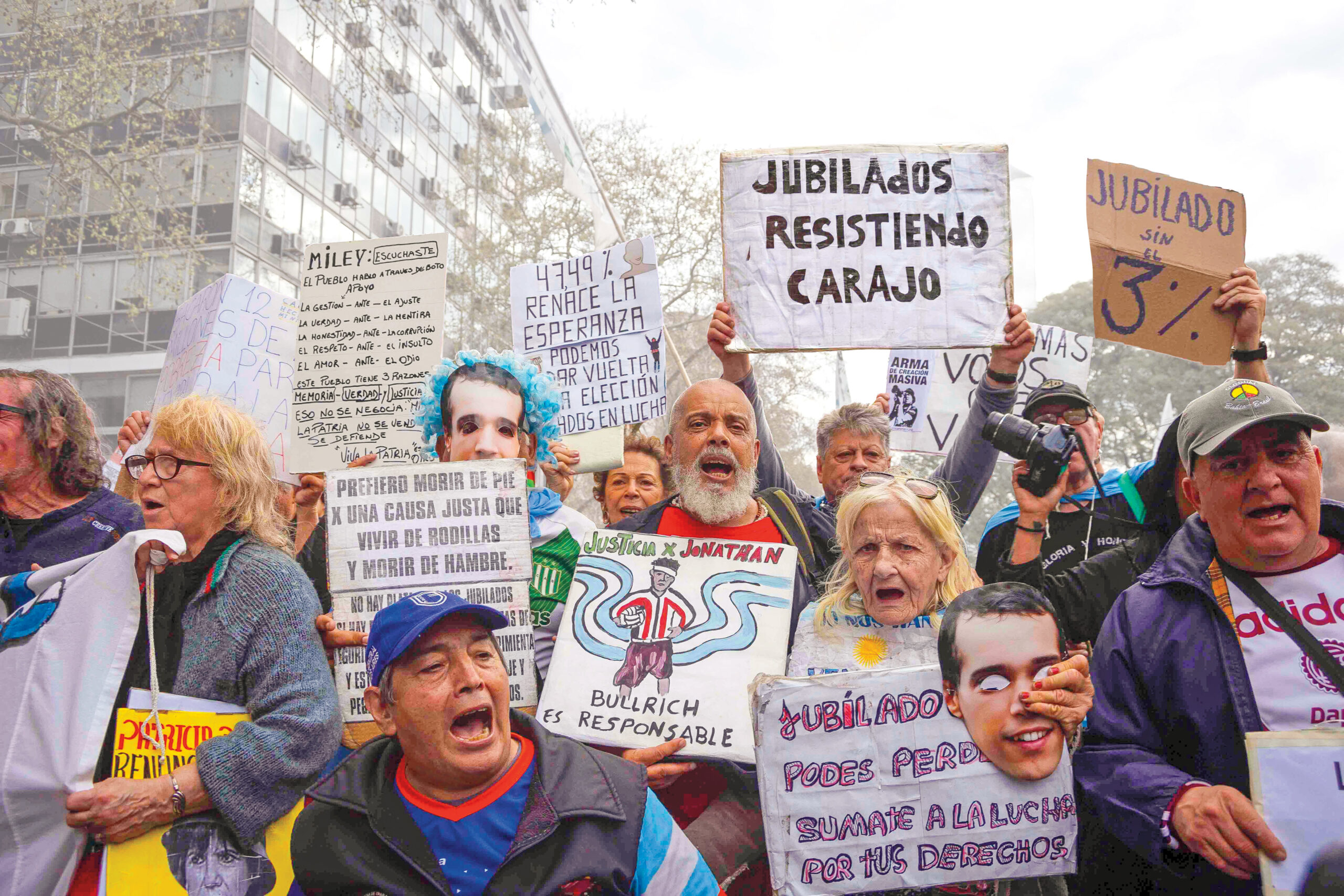
In Chile, years of demonstrations over parsimonious payouts by private pension administrators became the backbone of the 2019 social uprising that upended politics for more than half a decade. The year before in Nicaragua, protests against a proposed 5% cut to pensions triggered a bloody crackdown by the Ortega-Murillo regime that killed hundreds. Jair Bolsonaro’s 2019 pension reform sparked a general strike across 189 Brazilian cities, and is unlikely to have solved the issue for long. As Javier Milei’s chainsaw hovers above pensioners’ entitlements in Argentina—having already sliced away free medicines for the retired—clouds of tear gas have become a fixture in the streets around Congress in Buenos Aires.
Retirement ages remain strikingly low in some professions: 60 for civil servants in Barbados, 58 for teachers in Paraguay, roughly 55 for some police in Brazil. Workers with Mexico’s state oil firm PEMEX and soldiers in the Dominican Republic can retire in their early 50s, depending on years of contributions. But attempts to hike thresholds often prove political kryptonite, opening lawmakers to charges of wanting to work people into the grave. An emotive protest tactic is spreading: demonstrators brandishing and burning mock coffins.
For the third of elderly Latin Americans who have no pension or income at all—and those whose benefits are being eroded by inflation—such wrangling can seem abstract. Claudio Maraviglio of Argentina’s Unión de Trabajadores Jubilados en Lucha said pensioners’ purchasing power has crumpled since 2013, partly reflecting freezes by the Milei administration. “Retirees are in a really bad way,” said Maraviglio, 76, a retired economics professor. “People are sick, living on the street, and taking their own lives.”
Aging societies will also reshape Latin America’s industries and labor markets. Agriculture and health care already face staffing shortages, and care work is probably next. Long-term care could require public spending approaching 5% of GDP by 2035, particularly as fewer women are prepared to shoulder unpaid caregiving at home.
Employers may turn to outsiders: in Costa Rica, Nicaraguans already make up 16% of the workforce. But without efforts to integrate migrants— like Colombia’s mass regularization of 2 million undocumented Venezuelans in 2021—their contribution to social safety nets and long-term demographic renewal will be limited. Ultimately, argued Querubín, “countries will need greater productivity, and policies that allow people to be more active for longer.”
A world where one in four Latin Americans are old will have major consequences for economies. According to a recent report by the McKinsey Global Institute, the demographic dividend has added an average of 0.5% growth to GDP per capita across Latin America and the Caribbean every year since 1997. But over the next quarter century, this contribution will fall to zero. Mexico’s real GDP per capita, for example, will be $2,600 less in 2050 than it would have been had its population pyramid remained stable. That’s an awful lot of lost prosperity for a region whose economies have expanded by barely 1.5% a year since 2015.
“The main challenge for Latin America is that the region will get old before it gets rich,” said Ernesto Revilla, chief economist for Latin America at Citigroup.
Technological innovation—including artificial intelligence—could boost productivity, enable seniors to work part-time from home, and offset some of these headwinds. Other measures of well-being and quality of life could meanwhile tick up: those over 60 tend to report higher levels of happiness. But in crude terms of GDP, there’s little sugar-coating the negative impact. “The combination of low growth and higher fiscal pressures,” Revilla added, “is definitely not a good one for Latin America.”
Radical retirees, graying gangsters
The outlook is hazier on what Latin America’s aging means for its famously pendulum-like politics. Experience from Europe, Asia and North America suggests people become more conservative with age. If that holds true, the region’s recent rightward turn could become entrenched.
As fiscal resources tighten, and with turnout typically higher among older voters, one could even picture the rise of old-age populists: shuttering schools, and taxing embattled young workers, to fund gold-plated pensions and neighborhood noise patrols. “We can expect politics to become more populist,” Revilla said. The growing bloc of older voters “will demand a higher share of resources devoted to their concerns, like shifting resources from education to pensions, from the future to the present.”
Yet others expect less change. Having marched on the frontlines of protest uprisings in Bogotá, Quito, and Santiago, today’s millennials and Gen Z are “pretty progressive,” argued Irma Arriagada, a Chilean sociologist. “I think they’ll keep those values.”
Surprising cross-generational coalitions could emerge. Chile’s 2019 demonstrations saw students, Indigenous activists, and retirees march side-by-side. When pensioners protesting Milei’s austerity measures were beaten back by police last year, soccer ultras from Boca Juniors and River Plate entered the fray, carrying signs quoting Diego Maradona: “You’d have to be a coward not to defend retirees.”
Uruguay’s federation for retirees, called ONAJPU, regularly marches to demand increases to the basic state pension of 20,500 pesos ($510) per month, social housing for elderly homeless people, and lower pharmaceutical prices. “Our focus is the fight for a dignified retirement,” explained secretary-general Estela Ovelar, a platinum-haired 70-year-old. Although Uruguay has one of Latin America’s most generous welfare states, she said “it can do more.”

“Our focus is the fight for a dignified retirement.”
— Estela Ovelar, secretary-general of ONAJPU, Uruguay’s federation for retirees
Aging could also reshape policy debates in unusual directions. Pedro Bordaberry, a conservative senator in Uruguay, has called for an “immigration shock” to offset falling birth rates. “Uruguay is a country of immigrants: We’re children of the boats,” he said. Today, he thinks his famously stable nation has another “great opportunity” to attract young professionals from elsewhere.
Another unknown is what the Gray Tide means for endemic organized crime in Latin America. While conventional wisdom holds that crime declines as societies age, Uruguay and Chile, two of the countries with the lowest birth rates, have both seen their homicide rates rise in recent years. Experience suggests that other kinds of crime may merely shift online—and violence to behind closed doors.
Ovelar warns of a surge in scams targeting seniors, from phishing attacks to AI-generated deepfakes of politicians. “Technology is advancing in huge leaps, and a large part of our society is vulnerable to cyber-criminals,” said Nicolas Centurión, a Uruguay-based researcher of organized crime. Advocates call for specialized units to investigate crimes against the elderly, especially in care homes.
Silver linings
Querubín, the consultant, rejected the “language of crisis” often used when talking about the aging process in Latin America. Few could reasonably object to people living longer, or young people—especially women and girls—enjoying greater control over their lives.
Indeed, as a result of better diets, working conditions, medical treatment and exercise, many of the Latin American pensioners of 2050 will also remain fit and active well into their 70s. The discussion, the consultant argues, should focus on how to empower this growing stock of seniors, many of whom want to keep working, but can’t find suitable jobs or are held back by laws and social attitudes. “This could generate huge opportunities,” Querubín added.
Cities are also experimenting with ways to connect aging residents. On a recent afternoon in Montevideo, almost 200 seniors gathered in the Parque de la Amistad for a cultural celebration organized by the municipal Secretariat for Older Persons. Participants performed scenes from a Federico García Lorca play, sang traditional milongas, and danced or chatted with friends. “Our population may be old, but they have lots of life ahead of them,” said Nicolas Monzón, the secretariat’s executive coordinator.

Companies, nonprofits, and governments are also working to support citizens staying longer in the active workforce. Mexico’s Instituto Nacional de las Personas Adultas Mayores organizes job fairs and training programs to help people over 65 to stay in work and transition to new sectors. Pro Mujer, an NGO, is offering financial services and training to women aged 60-70 in Bolivia looking to start microbusinesses. São Paulo-based firm Maturi seeks to connect some 200,000 registered users over 50 with employers, handling profile alignment, shortlisting, interviews and job offers. A crop of 60-plus founders across the region—in fields ranging from all-female tequila distilleries to loyalty discount programs powered by fintech—demonstrates that age is no barrier to entrepreneurship.
In Latin America, the market size of the silver economy—spanning health, financial products, assisted living, and accessible tourism—is forecast to swell from $280 billion in 2024 to $650 billion by 2033. The UN estimates elder care alone, an industry that will be difficult to automate, could generate 31 million jobs across the region by the 2030s.
AgeTech, encompassing items like assistive robotics (think bionic limbs) and longevity-boosting biotechnology, is an especially buzzy growth area. In Mexico, VC-backed platform Koltin uses tech to offer tailored digital health insurance and social activities for over-50s, helping close the social protection gap. WideLabs in Brazil combines AI with cognitive health to help Alzheimer’s patients recover memories and reconstruct their own life stories. Háblalo, a free offline app created by Argentine founder Mateo Salvatto, helps seniors with speech or hearing difficulties communicate: it now has half a million users across 50 languages.
Another such company headquartered in Uruguay is Pills and Care, launched in 2017 as engineer Rodrigo Arias struggled to get his grandmother to take her blood-pressure pills. Studies show roughly half of people fail to take their medication as prescribed, increasing the risk of complications. His solution: a Roomba-shaped pill dispenser that can be monitored and controlled via an app. The technology, Arias emphasized, supports rather than replaces loved ones and carers. The regional and global trend toward single-person households will be “difficult to reverse,” he said. “We need to help people who are living for longer, and by themselves, to live more independently.”
Another upside, said demographer Rosero-Bixby, is the second demographic dividend: the potential economic boost that can be unlocked by wisely investing seniors’ savings. Chile’s private pension funds have directed upwards of $14 billion since 2000 toward highways, hospitals, ports, renewable energy, and transmission networks. Mexico’s retirement fund administrators, or AFOREs, boast some $438 billion in pension contributions: equivalent to 22% of GDP. These are increasingly being mobilized to finance pipelines, social housing, tourism facilities, and near-shoring industrial parks.
Birth rates may also rebound slightly in the short-term, as those postponing parenthood decide to take the plunge. Gómez and Cañete, the youngish Paraguayan couple, haven’t ruled out kids entirely. Seeing high-school students marching against corruption makes her ponder “how incredible it would be to bring up a human under those freedoms and consciousness that maybe our parents couldn’t give us.” Every now and then, he agrees, “you feel a spark.”

Changing with the times
Some in Uruguay are rolling with the changes, and adapting to a new, grayer era. In Rosario—a close-knit farming town 80 miles west of the capital—the Colegio Sagrado Corazón was closed in late 2024 after 135 years, with headlines blaming a dearth of paying students. “We were all really distressed,” said Luciana Berger, whose in-laws, husband, and sons, like her, have all passed through the elementary school’s doors. “It wasn’t the only case in the area.”
But the community rallied. An association of parents took over and rehired the school’s 20 staff. They mixed cement, fixed wiring, and raised funds for the kindergarten. Antonio Vizintín, a survivor of a fabled 1972 plane crash in the Andes, agreed to be godfather to the 56 pupils. Carlos Mesa, a former teacher who lectures at a nearby agricultural college, returned to serve as principal. Asked if he’s drawing a salary, he laughs: “We haven’t talked about it yet. It’s not a priority.”
“The sums have to add up,” said Alejandro Dellature, a manager at a local cheese producer who serves on a three-person board of parents. They plan to host summer camps in the nuns’ old quarters, and evening courses for adults in AI, agri-tech, and English. Local health workers have diverted a social security contribution from their paychecks to fund 15 scholarships. For those who can’t pay, they waive the fees.
This offers a vision of how Latin American communities may look in the future: smaller, hands-on, and more intentional, with people of all ages pooling space, ideas, and resources. The mix of entrepreneurialism and unpaid service required to keep the school alive for the next generation “is a huge challenge,” Dellature admitted, “but it nourishes your soul.”
What else is behind the shift?
Americas Quarterly examines the crucial but underexplored roles of race, migration and gender in Latin America’s demographic transformation:
ABOUT THE AUTHOR
Laurence Blair
Reading Time: 16 minutes
Blair reports from Paraguay for The Guardian, The Economist, and The New York Times. He’s the author of Patria, an alternative history of South America, and editor-at-large of The Paraguay Post.
Tags: demographics, pensions, The Gray Tide
Any opinions expressed in this piece do not necessarily reflect those of Americas Quarterly or its publishers.
